Flooded Basement Cleanup Help for Homeowners
Request an estimate first
A flooded basement is stressful. Water spreads into walls, floors, and boxes you forgot were down there. Many providers in our network pump out the water, dry the space, and clean what the flood touched.
Friendlycarolina Restoration is a referral service. We do not do the work. Providers do the work. We link you with independent local providers in the Greater Los Angeles area. You can request an estimate, compare your options, and decide with no pressure and no obligation.
Flooded basement? Stay safe first
Safety comes before cleanup. Water and power are a bad mix. Stay out of the basement if the water touches outlets, cords, or the electrical panel.
If you can reach the main breaker without stepping in water, you may turn it off. If you cannot, leave it alone. A licensed electrician or your utility can help.
Watch for these dangers
- Standing water near outlets or appliances
- A gas smell or a pilot light that went out
- Sewage in the water
- Slick stairs and floors
- Walls or ceilings that sag
If you smell gas or see sparks, leave the house and call emergency services.
Find out where the water came from
The source changes the plan. A providers' first job is often to learn what happened. Here are common causes in homes like those in Los Angeles.
Rain and groundwater
Winter rain events can soak the soil. Water then pushes through cracks, window wells, or the floor joint. Many older bungalows and tract homes from the 1950s to 1980s have these weak spots.
Pipes and appliances
A burst pipe, a failed water heater, or a leaking washer can fill a lower level. This is often clean water at first. It can turn dirty if it sits.
Sewer or drain backup
A backed-up drain brings in dirty water. Treat it as a health risk. Do not touch it with bare hands.
Why a flooded basement needs a quick start
Water moves into drywall, wood, and carpet. Mold can start to grow within a couple of days in damp, warm spaces. Many providers can respond quickly, but availability varies.
So the early steps matter. Take photos. Stop the source if you can. Then request an estimate.
What flooded basement cleanup includes
The exact steps depend on the job. Most providers follow a similar path.
Water extraction
Water extraction means pumping or vacuuming out standing water. Big jobs use truck-mounted or portable pumps. This step comes first.
Structural drying
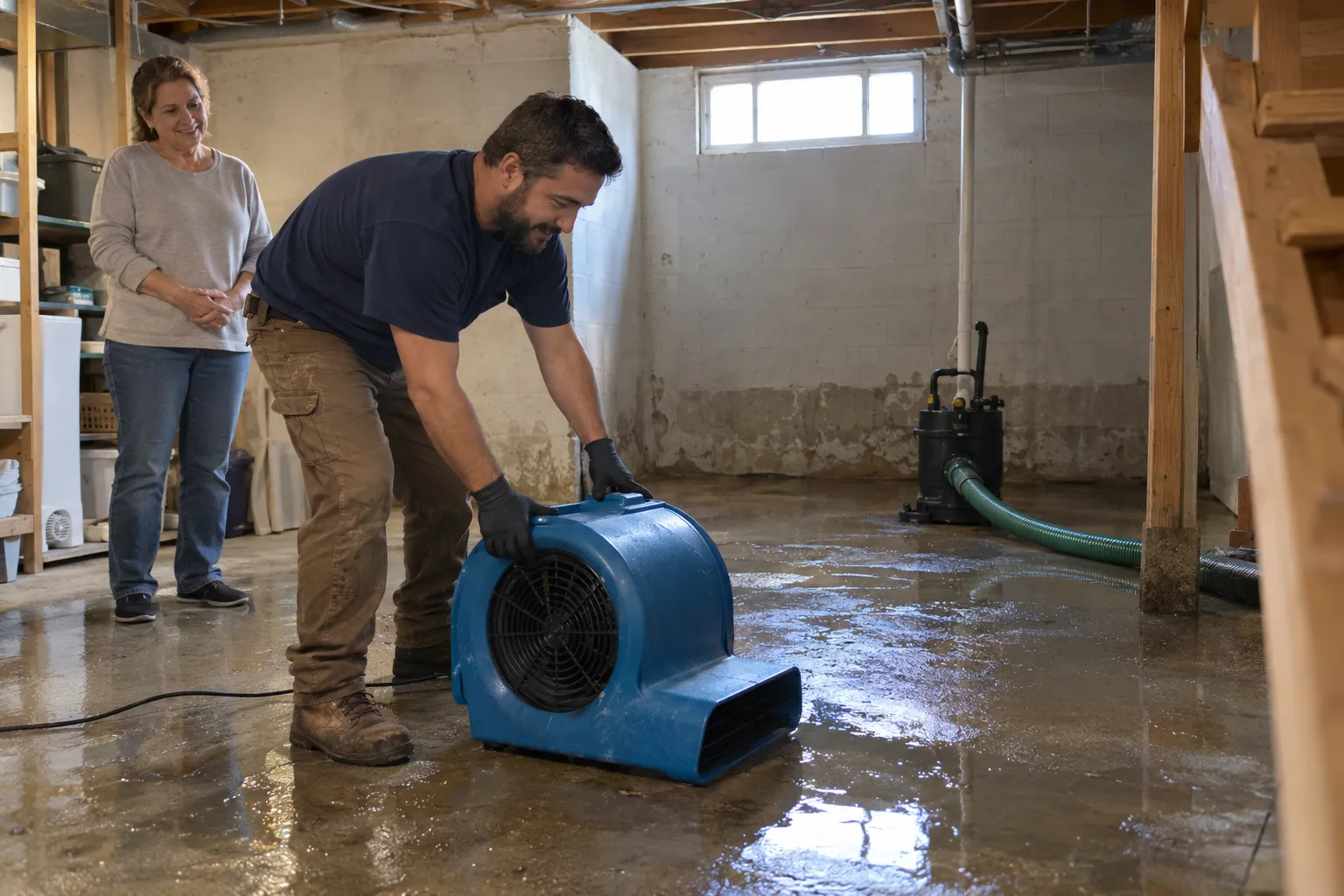
Structural drying means drying the building itself: framing, subfloor, and wall bottoms. Providers use air movers (strong fans) and dehumidifiers. They also use moisture meters to check progress.
Removal of ruined materials
Soaked carpet pad, insulation, and drywall often have to go. Providers may cut walls a few inches above the waterline. They can also dispose of the debris.
Cleaning and sanitizing
Surfaces get cleaned. If the water was dirty, providers use stronger methods. Ask how they handle that.
Finished vs. unfinished basements
An unfinished basement has bare concrete and open framing. It dries faster. There is less to remove.
A finished basement has drywall, carpet, trim, and maybe a bathroom. Water hides behind these layers. Drying takes longer, and more parts may need to come out.
Slab and raised foundations
Many homes in the Greater Los Angeles area sit on slabs or raised foundations rather than deep basements. If you have a lower level, a crawl space, or a sunken room, ask the provider how they will dry it.
After the cleanup
Cleanup is not the last step. Drying must be checked and recorded. Ask for moisture readings before and after.
Then comes rebuilding: new drywall, flooring, paint. Some providers do both. Others only do cleanup, so ask.
Check for mold
If you see dark spots or smell a musty odor days later, tell the provider. Early action keeps it small.
Your belongings
Sort items into three piles: keep, clean, and toss. Hard items like metal and plastic often clean up well. Porous items like cardboard, rugs, and stuffed toys are harder to save.
Photograph everything before you move it. Providers can often help document damage for a claim. Some policies may cover sudden damage, so check your policy.
Questions to ask the provider
Compare, then decide. Ask each provider the same things.
- What is in the written estimate, and what is not?
- How will you dry the space, and for how long?
- Will you take moisture readings and share them?
- Do you handle dirty water?
- Who removes debris?
- Can you help with paperwork for my claim?
How Friendlycarolina Restoration fits in
Friendlycarolina Restoration does not clean basements. Independent local providers do. We connect you with one, and you choose. No obligation.
What's Included
Water extraction first
Providers pump or vacuum standing water out of the basement before anything else starts.
Structural drying
Fans and dehumidifiers dry framing, floors, and wall bottoms, with moisture meters checking progress.
Removal of damaged materials
Soaked carpet pad, insulation, and drywall that cannot dry are cut out and hauled away.
Cleaning
Surfaces get cleaned and sanitized, with extra steps if the water was dirty.
Typical flooded basement cost ranges
Costs vary by water depth, size, and water type. These are typical U.S. ranges only. Get a written quote from each provider so you can compare them side by side.
| Item | Typical range | Notes |
|---|---|---|
| Water extraction | $500 – $2,500 | Depends on depth and area |
| Structural drying | $1,000 – $4,000 | Equipment runs for several days |
| Drywall and insulation removal | $1,000 – $3,500 | Based on how high water rose |
| Carpet and pad removal | $500 – $2,000 | Larger rooms cost more |
| Cleaning and sanitizing | $500 – $2,500 | Dirty water costs more |
| Mold testing or treatment | $500 – $3,000 | Only if mold is present |
How It Works
Stay safe
Keep out of water near power. Turn off the source or the breaker only if it is safe.
Take photos and notes
Record the water line, damaged items, and the source. This helps with estimates and claims.
Request an estimate
Tell us about the flood. We connect you with a local provider in our network.
Compare and decide
Read each written quote, ask your questions, and pick the provider you trust.
Why Call Friendlycarolina Restoration
Compare, then decide
Request an estimate, read it, and weigh a few providers before you pick one.
Plain referral
We do not do the work. Independent providers do, and we say so up front.
No pressure
You owe nothing for asking. Estimate first, then choose what fits your home.
Local providers
We link you with providers who work in your area and know local homes.
Other Services
Need flooded basement cleanup in Los Angeles?
Tell us what happened and where. A local provider can reply with questions and an estimate. You compare, then decide. There is no obligation.
No obligationFlooded Basement Cleanup FAQ
- How fast should I clean up a flooded basement?
- Start as soon as it is safe. Mold can begin to grow within a couple of days in damp spaces. Many providers can respond quickly, but availability varies. Request a callback to check provider availability, or request an estimate.
- Can I clean a flooded basement myself?
- Small leaks of clean water, maybe. Deep water, dirty water, or water near power needs a provider. They have pumps, dryers, and safety gear. Wet drywall and carpet also hide moisture that is hard to find.
- Does insurance cover a flooded basement?
- It depends on your policy and the cause. Some policies may cover sudden damage, while flood and groundwater often need separate coverage. Check your policy. Providers can often help document damage for a claim.
Reach a local provider
Tell us what happened and where. A local provider can reply with questions and an estimate. You compare, then decide. There is no obligation.
No obligation