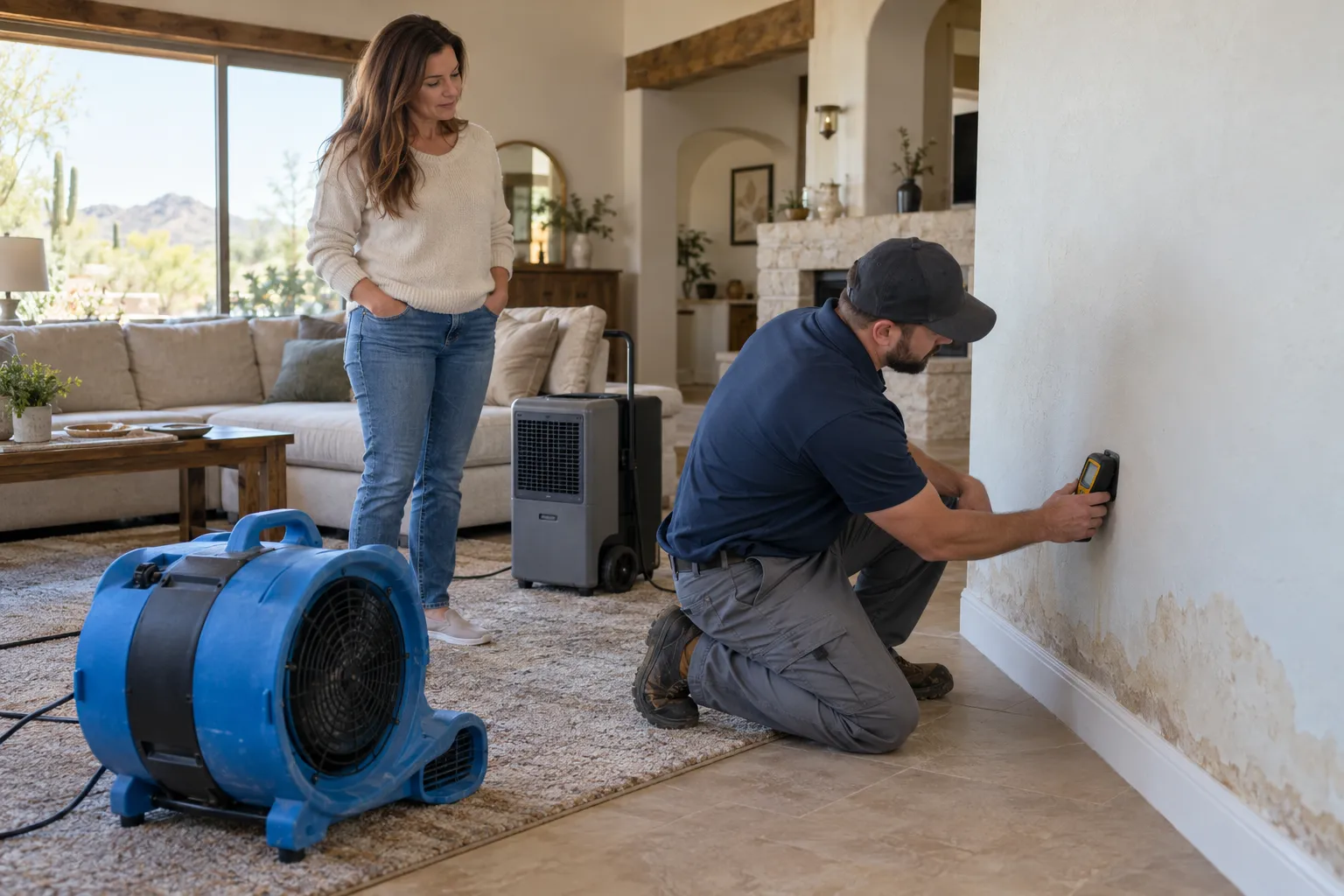
Water Damage Restoration for Los Angeles Homes
Request an estimate today
Water damage is any harm caused by water where it should not be. A burst pipe, a leaking roof, a failed water heater, or a winter storm can all do it. Restoration means pulling out the water, drying the structure, cleaning, and fixing what broke.
Friendlycarolina Restoration is a referral service. We do not do the work. We connect homeowners in the Greater Los Angeles area with independent providers in our network. Those providers do the work and set their own prices. You can ask for estimates, compare them side by side, and decide with no obligation. This page explains each step in plain words, so you know what to expect before anyone comes to your door.
Water in Your Home? Start Here
You have water where it should not be. That is stressful. Take a breath. This page tells you what to do first, what providers do, and how to choose.
Friendlycarolina Restoration is a referral service. We do not do the repair work. We connect you with independent local providers. They do the work. You compare, then decide.
Safe First Steps
Do the safe things first. Skip anything that puts you at risk.
- Stay away from wet areas near outlets, cords, and the breaker panel.
- Shut off the water at the source if you can. Look for a valve under the sink or the main shutoff.
- Turn off power to the wet area only if you can reach the panel on dry ground. If not, leave it alone.
- Lift small items, rugs, and papers to dry spots.
- Take photos and video of the damage before you move much.
Why Time Matters
Wet drywall, wood, and carpet act like sponges. Water spreads inside walls and under floors, where you cannot see it. Wood swells. Paint bubbles. Metal rusts.
Mold can start to grow in as little as one to two days in damp, warm spots. That is why many providers can respond quickly when you call. Availability varies, so ask each one.
How Local Homes Get Hit
In our region, long dry seasons make people forget about leaks. Then winter rain arrives. Water can push in through roofs, windows, and low doors. Stucco ranch homes on slabs can take on water through cracks in the floor. Older bungalows and tract homes from the 1950s to 1980s often have aging pipes and supply lines. Any of these can fail without warning.
What Restoration Covers
Restoration is a set of steps. Not every job needs all of them.
Water Extraction
Water extraction means pumping and vacuuming out standing water. This comes first. Less water means less damage.
Structural Drying
Structural drying means drying the frame of your home: floors, wall cavities, and framing. Providers use fans and dehumidifiers (machines that pull moisture from the air). They also use moisture meters, which are tools that show how wet a material is.
Cleaning and Sanitizing
Providers clean surfaces and treat them to slow germs and mold. They also remove items that cannot be saved, like soaked carpet pad.
Repairs
Once things are dry, repairs begin. That can mean new drywall, paint, trim, or flooring. Some providers handle this. Others stop at drying. Ask before you agree.
Types of Water and Why They Matter
Not all water is the same. The source changes the risk and the steps.
- Clean water comes from a supply line, a sink overflow, or a leaking tank. It is the least risky, but it turns worse if it sits.
- Gray water comes from a washer or dishwasher. It has soap and some germs.
- Black water comes from sewage or outside flooding. It is unsafe. Do not touch it. Keep kids and pets away.
Tell each provider where the water came from. It helps them plan and quote.
Working With Your Insurance
Some policies may cover sudden damage, like a burst pipe. Slow leaks and flooding from outside are often treated differently. Read your policy. Ask your insurer what it includes.
Providers can often help document damage for a claim. Ask them for photos, moisture readings, and a written scope of work. Keep every receipt.
How to Compare Estimates
Two or three estimates are usually enough. Put them side by side.
- What work is listed, step by step?
- How many days of drying are planned?
- Will they take moisture readings and share them?
- Is cleaning and repair in the price, or extra?
- Is the quote in writing?
- Does the provider show proof of license and insurance, where your area requires it?
A low price can leave out key steps. A high price can include extras you do not need. Ask questions until the numbers make sense.
Request a callback to check provider availability in your area.
Signs to Slow Down
You may want to step back if a provider does any of these:
- Pushes you to sign on the spot
- Will not put the price in writing
- Cannot explain the steps in plain words
- Asks for full payment before starting
You are in charge. Take a little time to decide, even in a rush.
What the Days After Look Like
Expect the first visit to include a walk-through, moisture checks, and a plan. Then extraction starts. Drying equipment usually runs for several days. A provider returns to check readings. When walls and floors reach normal dryness, the equipment leaves.
Getting Your Home Back to Normal
After drying, you can plan repairs. Some homes need only paint. Others need new drywall or floors. Get a written quote for repairs too. Keep your photos, readings, and invoices in one folder.
How Friendlycarolina Restoration Fits In
Here is who does what. You send a request. Friendlycarolina Restoration routes it to providers in our network. Those providers contact you, give estimates, and do the work. They are independent. They set their own prices and schedules. Friendlycarolina Restoration does not do the work and does not pick for you.
Plain words, no pressure.
What's Included
Water Extraction
Pumps and vacuums pull standing water from floors and carpet so damage stops spreading through your home.
Structural Drying
Fans and dehumidifiers dry walls, floors, and framing, with meters that confirm the wet spots are gone.
Cleaning and Sanitizing
Surfaces get cleaned and treated, and ruined materials are removed to lower the risk of mold.
Repairs and Rebuild
Once dry, providers can replace drywall, paint, trim, and flooring. Ask if repairs are part of the quote.
What Water Damage Work Can Cost
Prices depend on how much water, how long it sat, and what it soaked. These are typical U.S. ranges only. Providers set their own prices, so get a written quote before you agree.
| Item | Typical range | Notes |
|---|---|---|
| Water extraction | $500 – $2,500 | Depends on depth and area |
| Structural drying | $1,000 – $5,000 | Equipment days drive the price |
| Cleaning and sanitizing | $0.50 – $2.50 per sq ft | Higher for gray or black water |
| Drywall removal and replacement | $2 – $5 per sq ft | Includes patch and paint at times |
| Carpet and pad removal | $1 – $3 per sq ft | New flooring costs extra |
| Full repairs and rebuild | $2,000 – $15,000+ | Varies a lot by scope |
How It Works
Make Your Home Safe
Shut off the water if you can, avoid wet electrical areas, and take photos of the damage.
Send an Estimate Request
Tell us what happened and where. We route it to local providers.
Compare What You Receive
Look at scope, drying plan, and price in writing. Ask any question you have.
Choose and Schedule
Pick the provider that fits. They book the work and handle the repairs.
Why Call Friendlycarolina Restoration
Compare Options
Ask for more than one estimate and see the scope, steps, and price side by side.
No Obligation
Requesting an estimate does not commit you. You decide if and when to hire.
Clear Roles
Friendlycarolina Restoration refers you. Independent providers do the work. You always know who is who.
Local Providers
Providers in our network know local homes, weather, and building styles.
Other Services
Need water damage restoration in Los Angeles?
Tell us what happened and where. A local provider can reply with questions and an estimate. You compare, then decide. There is no obligation.
No obligationWater Damage Restoration FAQ
- What should I do first when I find water damage?
- Stay safe first. Shut off the water source if you can, avoid wet areas near electricity, and take photos. Then ask local providers for estimates so drying can start quickly.
- How long does it take to dry a home after water damage?
- Most jobs take several days of drying with fans and dehumidifiers. Bigger leaks, wet framing, or thick materials can take longer. A provider checks moisture readings to know when it is done.
- Does homeowners insurance cover water damage?
- Some policies may cover sudden damage, like a burst pipe. Slow leaks and outside flooding are often treated differently. Check your policy and ask your insurer before you decide.
Reach a local provider
Tell us what happened and where. A local provider can reply with questions and an estimate. You compare, then decide. There is no obligation.
No obligation